

Christ plays in ten thousand places,
Lovely in limbs, and lovely in eyes not his
To the Father through the features of men’s faces.
(Gerard Manley Hopkins)
Prelude: Words Washed Away
I was supposed to speak most of this out loud. Last month I was driving on-site to the pitched tents of the Wild Goose Festival, in a bucolic setting named VanHoy Farms in Harmony, North Carolina. I was set to give festival-goers a keynote marking the decade since Fr. Richard Rohr and I birthed The Divine Dance: The Trinity and Your Transformation into the world. ‘The Goose,’ as this annual gathering is affectionately known, is a happening I helped sow fifteen years ago in a field full of justice-seekers and contemplatives and a frankly heroic number of folding chairs. While I haven’t been on staff in years, I contribute something each season she comes ‘round, either up-front or behind-the-scenes. More than anywhere else in this flesh-and-blood world, the Goose feels like a homecoming of God’s peculiar family tree.
I’d spent the better part of a year crafting my Divine Dance retrospective, reflecting on my life while reading everything from fourth-century funeral orations to a peer-reviewed article gently scolding people like me for misusing a Greek word. Driving to Harmony for day three of the festival, I had a singing bowl riding shotgun and a Rublev icon wrapped in a keffiyeh on the back seat.
I started seeing texts in the group chat warning of a storm brewing — and it wasn’t Starchild’s Turkish hummus being too spicy at the Wildlings Camp potluck. It was a literal cloud-darkening, foreboding weather front. And somewhere on that last stretch of road I saw it: the sky opened up, monsoon-grade rain, wind like a freight train. It felt uncomfortably similar to Hurricane Helene, the deluge that ravaged my home city of Asheville nearly two years before. By the time I arrived, my tabernacle venue (along with a good many others) was twisted and lying flat in the mud. My session was cancelled, as was virtually everyone’s. Word was that an even more severe storm was on its way; we were all being herded to ‘the coliseum,’ the large permanent structure at the center of the campground, which dug into the earth, descending bleachers mostly below-ground.
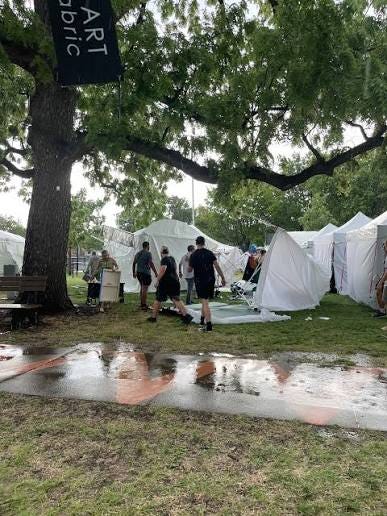
I checked on my Wildlings: Rainier and Kristi? Fran and Carl ‘Skye’ McColman? KJ Song? Jo’el? Bec? Fr. Castello? Aline? Sarah and family? Jon Carl, Joe Michael, Rex, Starchild? All present, accounted for, and schmoozing amid the tamped-down mud between megaphone announcements:
No further storm on the horizon. And nobody was seriously hurt, thank God.
Beyond my initial wave of relief, my next thought was not especially sanctified: a year of effort, poof! Gone with the wind. My next thought recovered a little: Well, that’s on-theme. The talk was about a God Whose very being is One-yet-Three at home in one another, a God who once pitched a tent among us and keeps on dancing even when your tent looks like a squashed bug.
And today, October 4th, is the actual tenth annivesarry of the Trinity Title that Could. Somehow reaching a plethora of readers across spiritual and theological differences, from Bono to angry heresy-hunters, we helped stoke a global conversation that had reignited in 2007 with my friend Paul Young’s 20-million+ bestseller The Shack, and continued in 2013 with the more subterranean but esoterically signficiant The Holy Trinity and the Law of Three by Cynthia Bourgeault. So over the next couple weeks I’m going to share my rain-delayed Wild Goose keynote with you here instead, in the form it arced toward all along: longer, stranger, meticulously hyperlinked-and-footnoted for the sleuths among us, and more patient than I could have managed with a stage clock counting down in front of me.

When Fr. Richard and I released The Divine Dance in October 2016, I offered readers a bonus chapter telling the story of the night the Trinity stopped being an idea to me. If you’ve read that, what I’ll be serializing here for you updates it. Some of that vintage chapter will survive here word-for-word; some of it I’ve had to correct, along with a few elements in the book itself; and some of this I simply couldn’t say ten years ago, either because I didn’t realize it yet or because I wasn’t brave enough.
Pull up a chair. There’s a seat at this table with your name on it. Before we’re done, I hope to demonstrate that it’s always been set for you.
I. Where Do I Come From?
I was adopted from birth. I found out around the ripe age of five, because I wouldn’t stop pestering my mom with birds-and-bees questions. She hemmed and hawed, not wanting to give a disclosure that would have reinvented my young world. But at some point I asked her point-blank:
“Mommy, did I grow in your belly?”
My mom was religious in a way that was heroic at best and brittle at worst. She belonged to what I call the “I cannot tell a lie” school of ethics, to the point where when I was reading Corrie Ten Boom’s The Hiding Place a few years later as a homeschooled kid, she opined that the Ten Boom family made a mistake when concealing their secret room from the Netherlands occupying Nazi Sicherheitsdienst. “When they asked if the family was hiding Jews, they should have told the truth,” my mom said gravely and full of faith. “God would have taken care of them.”
So when I asked if I grew in her belly, I put my mom in a compulsory truth-serum situation. Even though this was not a conversation she was eager to have with her inquisitive kindergartner, she gave it to me straight: I was adopted, she said, explaining that this meant being chosen rather than incubated.
And my dad added when he came home from work that evening: “Out of all the boys and girls we could have chosen, we chose you.” At five years old this landed pretty sweetly. I thought it was kind of cool, and it made me feel special (a little entitled, if I’m honest).
What took me longer to notice was the aftertaste. That conversation, and one more like it about five years later, were the only times the subject came up overtly in our house until I was in my 30s. My dad said something to me around age ten that I’ve turned over for years afterward: “We love you as though you were our very own, because as far as we’re concerned, you are our very own.” It’s a poignant sentiment. But it came with an unspoken second half that I picked up the way kids just know: So let’s never speak of this again. I knew by then that my being adopted was bittersweet for them: fulfilling a lifelong desire to raise a child of their very own, yet not being able to grow said child au naturel. Plus their state-sponsored parenting training, I’d later learn, was typical of an era where the explicit message was If you do your job well as parents, your adoptees won’t wonder where they came from.
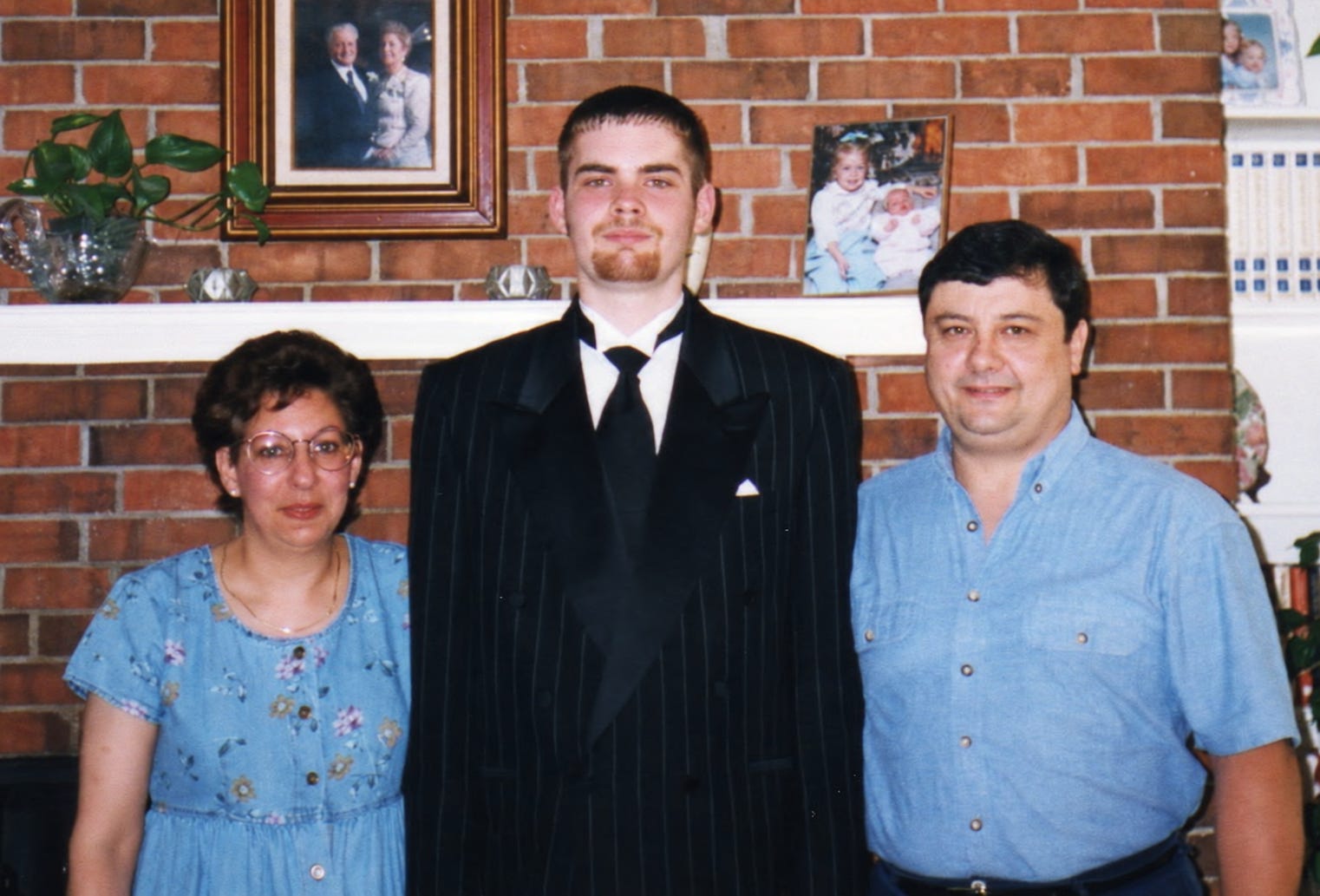
So with this curiosity quelled at the root, I never did speak of it again. Whenever I told a close friend of my adoptee status growing up (usually because they noticed my towering above Mom and Dad like a stork in a henhouse) I’d add, preemptively, “But don’t ever mention this around my parents.”
I mostly didn’t think about it, not even when I was alone with myself. Not in high school, and not much in college, although one of my roommates at Berry College (a sharp cartoonist and student journalist who grew up to become the acclaimed fiction writer David James Poissant) developed an elaborate theory that I was the illegitimate love child of the late science fiction visionary Philip K. Dick. He presented compelling circumstantial evidence: we both held similar idiosyncratic interests — like Jesus, aliens, time travel, and the nature of knowing. My roomie continued: PKD was a notorious womanizer, and he was in my home state of Georgia the year I was born, carrying on with some lady. And I’ll admit me and the paranoid, gnostic visionary did favor each other. My buddy, house church mystic turned southern-fried atheist Neil Carter, carried this conjecture and even wrote the Dick estate (at this point a film-adaptation powerhouse) to ask his official children point-blank: Do you have a long-lost little brother? They actually wrote back, denying it. But of course they would.
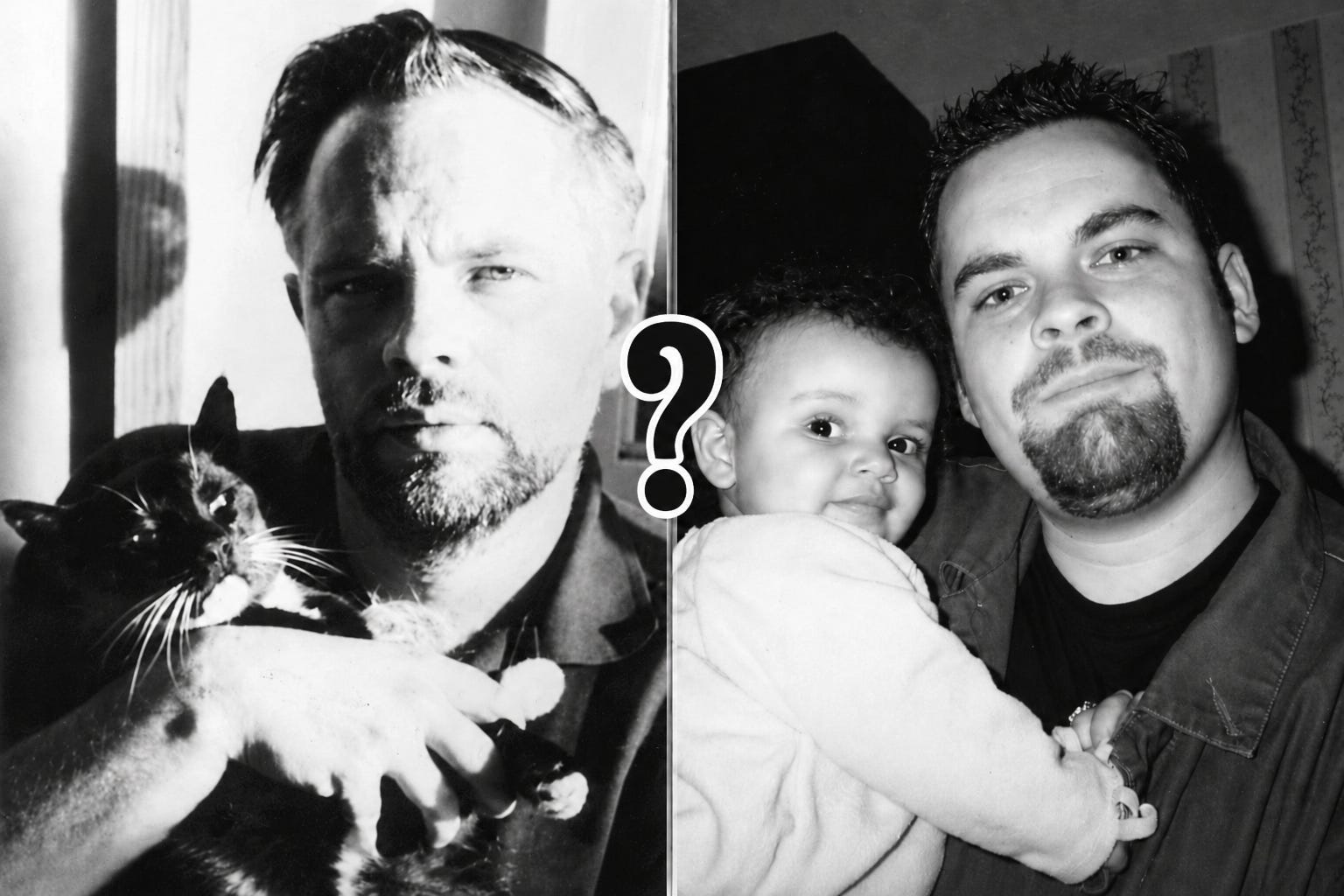
As I’d discover years later, I am — alas — not the bastard son of Philip K. Dick. You win some, you lose some.
But questions have a way of working themselves into a body, and a life. When I was seventeen, my high school sweetheart (who’d go on to become my wife and still later, my ex-wife, bookending a lot of love amid life’s difficulties and birthing two extraordinary children) asked whether I was curious about my family of origin. I told her no, I hadn’t given it much thought. Looking back, I was reverberating the tone my parents set, the unspoken creed of If I’m in a loving home, where I came from doesn’t matter. I was, as I later put it, profoundly incurious. By age 30, though, this incuriosity began fissuring. With help from my old mentor Wes Roberts and his friend, the late godfather of evangelical talk radio Rich Buhler (himself an adoptee), I learned about Georgia’s Adoption Reunion Registry and its double-blind process for opening sealed records: notarized letters passed back and forth between inquirer and recipient without signatures or identifying details until both parties confirmed they wanted contact. Very official, and very slow.
My birth mother, it turns out, was better at the Internet than the state of Georgia. As 2011 dawned, before the official process had run its course, I came home from the holidays to a Facebook friend request. I was already maxed-out at five thousand Facebook friends at the time and received requests daily, but this one had a helpful note attached: “Hello. I could be wrong about this. But I believe I’m your birth mother.”
Y’all. That’s still the most unique friend request I’ve ever received.
Within minutes of witnessing this singular digital rupture, I took off solo in my car under Raleigh’s night sky, calling her in hopes of receiving the Rosetta Stone that might decode my life.
Within a brief span of time we’d meet; shortly thereafter, I’d meet my birth father too.
So what was it like? Monumentous to be sure, with synchronicities abounding. Among other things, I discovered that my birth parents met and I was likely conceived at the very same tiny liberal arts school I’d grow up to attend, unbeknownst to me. And my half-sister (a decade my junior) told my birth-mom, circa 2001, that she thought my name was Michael, and so my birth-mom began addressing her journal entries to me as such. Even so, things turned out…different than I anticipated. There’s a story our culture tells, about adoption and reunions: there’s this inborn ache, a primal wound, and when you finally find these originating people your previously-garbled signals positively sing with coherence. That’s it! You’re complete.
It’s a compelling archetype, but that’s not what happened in my case. What unfolded was lovely, and I know plenty of adoptees whose reunions went south quickly, so I’m grateful for the kindness and curiosity present among us all. In encountering my birth parents I found two opinionated, entrepreneurial, creative people and felt, Oh, there you are. But as I told my friend Jeremy Uriz in an interview later that year, it wasn’t this vivid flash of “Oh, I found this missing piece of myself” as I’d eventually built it up in anticipation. What these long-delayed reunions confirmed instead was more singular and strange than I expected: “I’m just a unique person on my own two feet.”
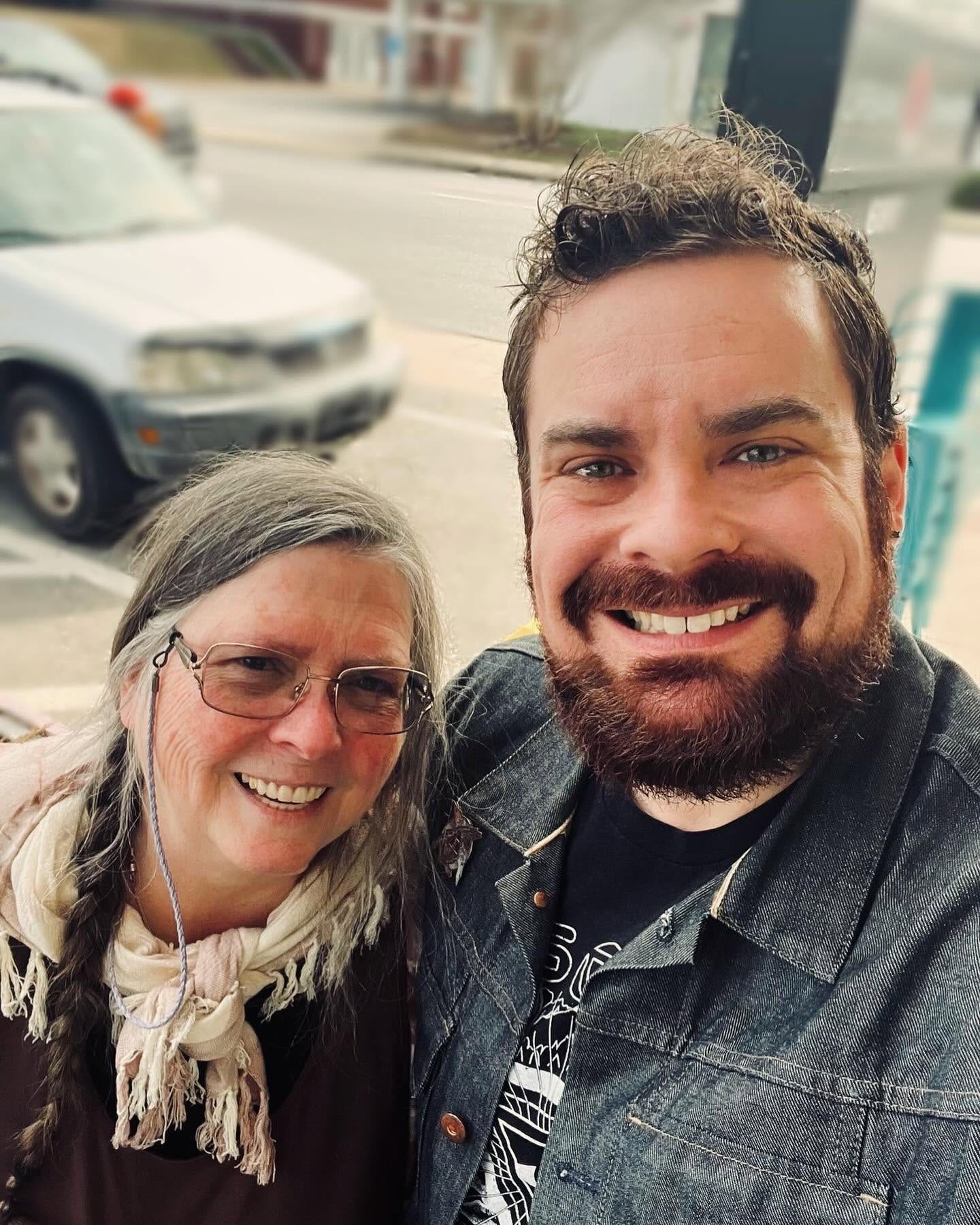
Hold onto this sentence. It comes back in an upcoming installment, out of the mouth of a fourth-century bishop. Neither of us saw it coming.
Oh, and one more thing I learned from my birth-father’s side of the family: I’m half-Turkish.
This ancestral discovery sets the rest of this story in motion. But before I take you to Turkey I need to name the question burrowing beneath my birth certificate: Where do I come from?
Even more urgent was What am I made of?
And implicit here, a few stories deeper: What’s anything made of?
If we burrow all the way down — past molecules and memes, beneath atoms and archetypes — what’s waiting for us, present at the ground-floor of reality?
In The Divine Dance, Richard and I named the soul-sickness of our moment as a painful disconnection from God, from ourselves, from each other, and from our world. In the decade since, I’ve only grown more convinced of this four-fold alienation, witnessed everywhere from humanity’s development of complex agriculture and sedentary living, to our tumultuous birth into self-reflexive consciousness.
I’m going to argue that the Christ-inflected response to the question What is anything made of?, the one that heals all four of our pain-points in turn, has been sitting in our tradition for sixteen hundred years. Mostly ignored, occasionally dusted off and admired, almost never used.
Please keep reading; part 2 arrives in a couple days. Subscribe if you haven’t already, so it lands in your inbox.
A small invitation for the next ten years
One more thing before you go.
When The Divine Dance waltzed into the world ten years ago today, I had no idea then where that dance would carry me — or what would compost, sprout, die back, and flower again in the decade that followed.
In some ways, At Home in One Another is my attempt to take stock of this. But it’s also a bridge.
That fourfold alienation I named just above — the ache of separation from the Sacred, from ourselves, from one another, and from this living world — isn’t only one of the ideas Fr. Richard and I explored ten years ago. It’s become one of the central questions of my life:
What actually helps us come home again?
Not only in our heads. Not only on Sundays. Not merely by adopting better opinions.
In our bodies. In our relationships. In our neighborhoods. In the way we spend our attention and wield whatever measure of power we’ve been given.
I’ve come to think of this as Jesus’ fourfold Way of Belonging, Beholding, Becoming and Bestowing.
And that’s what I’m cultivating in these virtual pages of The Evolutionary Revolutionary.
Week by week, I’ll be sharing lectionary storytelling: setting these ancient texts loose among the bold, strange, funny, heartbreaking stories of saints, mystics, movements, troublemakers and ordinary radicals who discovered that another way of being human was possible.
And for those who want to practice more deeply with me, each month we’ll work with three Opti-Mystic Ways that Work: one practice turned inward, toward attention and presence; one turned toward the space between us, where relationship happens; and one turned outward, toward our neighborhoods and the common good.
The mystic. The neighbor. The organizer.
I’m increasingly convinced they’re the same person, ripening on the Vine.
Jesus taught people how to wake up under the shadow of empire. G.I. Gurdjieff spoke of awakening with the world literally convulsing around him. Neither treated attention as an ornamental spiritual hobby.
I don’t think we have that luxury either.
So this Substack is my attempt to become more faithful to the work, and the play — and more faithful to you, dear reader: less scattershot, more rooted; manna for the journey offered week in and week out, with embodied practices for people who want not merely to think differently about these times, but to meet them differently.
And yes: this work is reader-supported.
Most of what I publish here will remain freely given. I mean that. If money is tight, please stay at the table. And if you genuinely want access to something I place behind the paid threshold but can’t afford it, write me. No financial autobiography or justification required.
If, on the other hand, you’ve been reading me for years — or you’ve only just arrived, but recognize something here that you’d like to help grow — I would be deeply grateful if you’d become a paid member.
Your support buys something increasingly scarce in my life and in our culture:
attention.
Mine, given more fully to this cultivation. And, I hope, returned to you in forms that help you recover more of your own gardens.
There’s one bit of celebratory mischief attached to this particular month, too. October is both the tenth anniversary of The Divine Dance and it’s my birth-month. So through my birthday, October 30, anyone in the U.S. joining as a Holy Fool at $100 or more will receive a signed copy of The Divine Dance, personalized if you’d like, with shipping on me. For Canadian readers, the threshold is $200 (dang postal rates); elsewhere on God’s green Earth, reply to me and we’ll see what we can work out.
Consider it a little birthday gift for both of us.
Because that’s what I want this next decade to be about: gifts circulating. Attention circulating. Wisdom circulating. Money, when we have some, circulating. Practices becoming lives, and lives becoming communities capable of offering genuine exchange.
The old tree feeding the young ones through the roots.
If you’d like to help tend this strange little ecosystem with me, I’d be honored.
Either way, keep reading.
We’ve only just pulled up our chairs.

Wife and I just finished reading a novel titled *Days You Were Mine* about a 29 yr old man who met his birth mother. The book presented meeting a birth parent as often very complex emotionally. It would appear that your meeting with your birth mother is perhaps not nearly as complicated.
I enjoyed the post. Thank you.
Dear Michael, thank you. My travel worn soul has found a home here. Two things I was not able to accomplish …
1. Please change my email to efsalva22@gmail.com
2. I was not able to update my card which I will need to do. I was also not able to change the subscription gift any to $100, which I would like to do. Happy BirthDay