

A confession to begin: you’re reading the re-inaguration of a newsletter I’ve been about to launch for the better part of two years. I named this renewed direction (and Substack migration) to myself in the dead of winter 2025. I mapped out a season of reflections to begin at Advent. When Advent came and went, I mapped out another season to begin on Trinity Sunday. Each time life had other plans — and so, if I’m perfectly candid, did my perfectionism. There’s a fair bit of irony in finally hitting “send” on a prayer invitation rooted in my favorite saying from the Gospel of Thomas: If you bring forth what is within you, what you bring forth will save you. Consider this me bringing it forth. There’s irony in the timing, too: This is the season of my namesake, the Archangel Michaḗl, which means you’re getting a Michael writing about Michaḗl in the run-up to Michaelmas. (I promise the next letter will be about somebody else.)
I don’t need to tell you these are heavy days. Many of us wake up braced for whatever the headlines will bring, our nervous systems frayed and our hope running on fumes. The siren’s song is to retreat into numbness, doomscrolling, or a spirituality that serenely floats above it all — what the wily Greco-Armenian mystic G.I Gurdjieff called the evil inner god of self-calming.
I don’t think we need more hot takes. I think we need practices: grounding, time-tested, body-honest ways of meeting reality that grow three elements at once:
Our being — the inner journey of waking up.
Our interbeing — the relational dance of showing up for each other.
And our world — the outer motion of putting our bodies on the line for the common good.
The old wisdom schools called these the esoteric, the mesoteric, and the exoteric. In moving to Substack I wish to inaugurate more than a new era of intentionality for my writing; I wish to invite you, my hovering-just-around 100,000 readers (I’m still pinching myself, thank you so much) into a living, mycelial network of shared grounding and goodness; a wisdom school for holy fools who have soberly counted the cost of arising on planet Earth in these perilous times, and who have nonetheless decided to dance.
If you’re not subscribed yet, please do! We’re in for quite a journey together.
Personally, I dance with two left feet. I love the invitation Jesus gives, beautifully rendered by the late pastor Eugene Peterson:
Are you tired? Worn out? Burned out on religion? Come to me. Get away with me and you’ll recover your life. I’ll show you how to take a real rest. Walk with me and work with me—watch how I do it. Learn the unforced rhythms of grace. I won’t lay anything heavy or ill-fitting on you. Keep company with me and you’ll learn to live freely and lightly. (Gospel of Matthew 11:28-30, The Message)
I call the practices I’ve learned from decades of being a stumbling, bumbling friend of God in the Way of Jesus Opti-Mystic Ways that Work. I welcome all people of goodwill to try these rhythms with me. What I’ve discovered is that inner awareness, relational skill-building and outer change-making are part of a harmonious whole; only the direction changes. As we ripen, the mystic, the lover, and the organizer turn out to be the same person.
The novena below is a fractal working model of what I hope The Evolutionary Revolutionary will be. It runs nine days in three movements: inward toward God, outward toward each other, and down into the ground of our neighborhoods and nations. Then it opens into a feast, because liberation without celebration burns out; our movements have been running on too little joy for too long.
So let’s begin with the angels.
Angels?
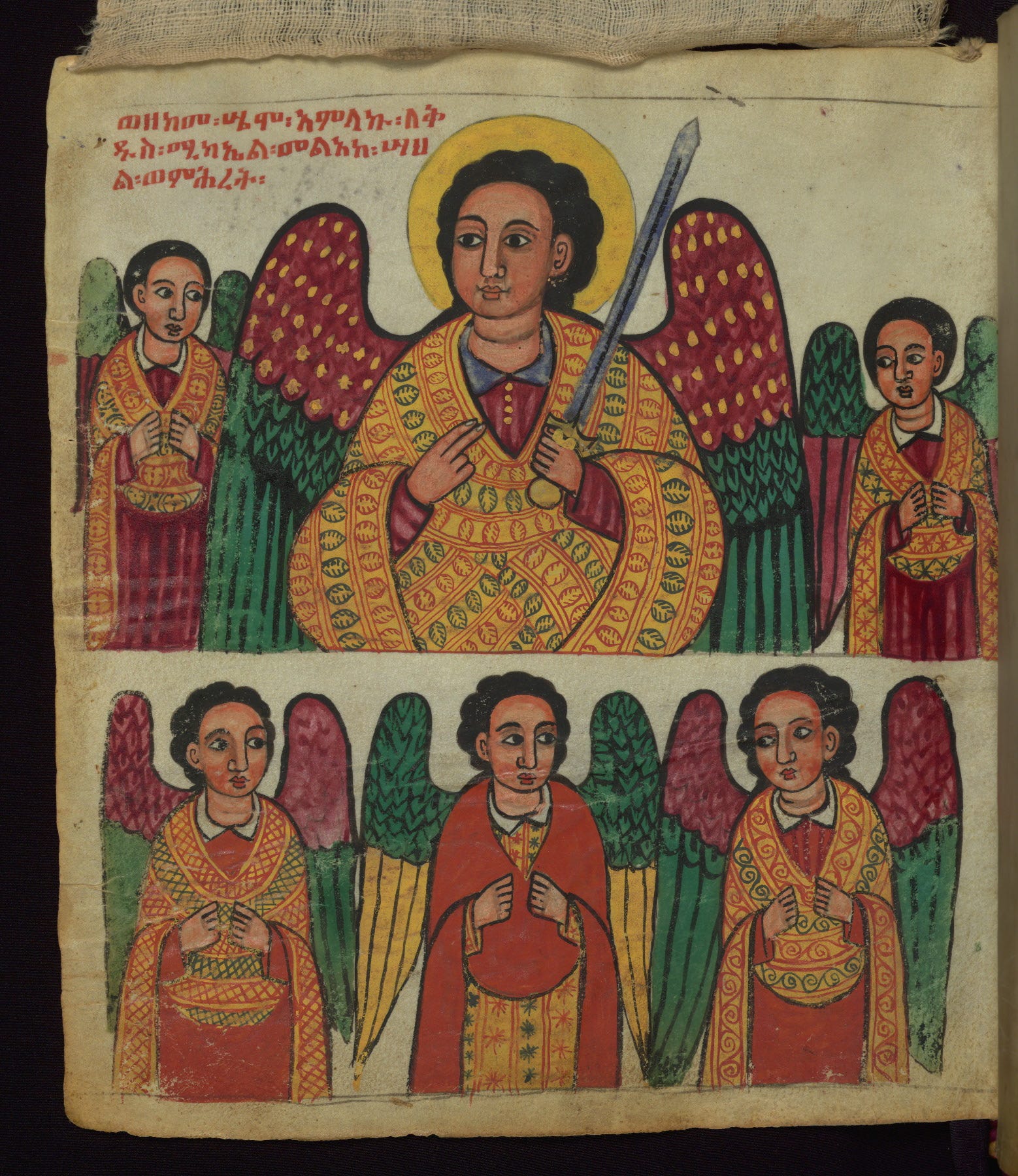
Yep. They’re depicted in our world’s spiritual lineages as messengers of the Divine, as helpers of humanity and the more-than-human creation. While often feeling as uncomfortably out-of-place in the modern landscape as faerie folk, gnomes, and dryads, people from earliest history have called on these messenger spirits for healing, assistance, and epiphanies for life’s deepest questions. Angels are associated with planets, seasons, gifts of tools, and flashes of insight.
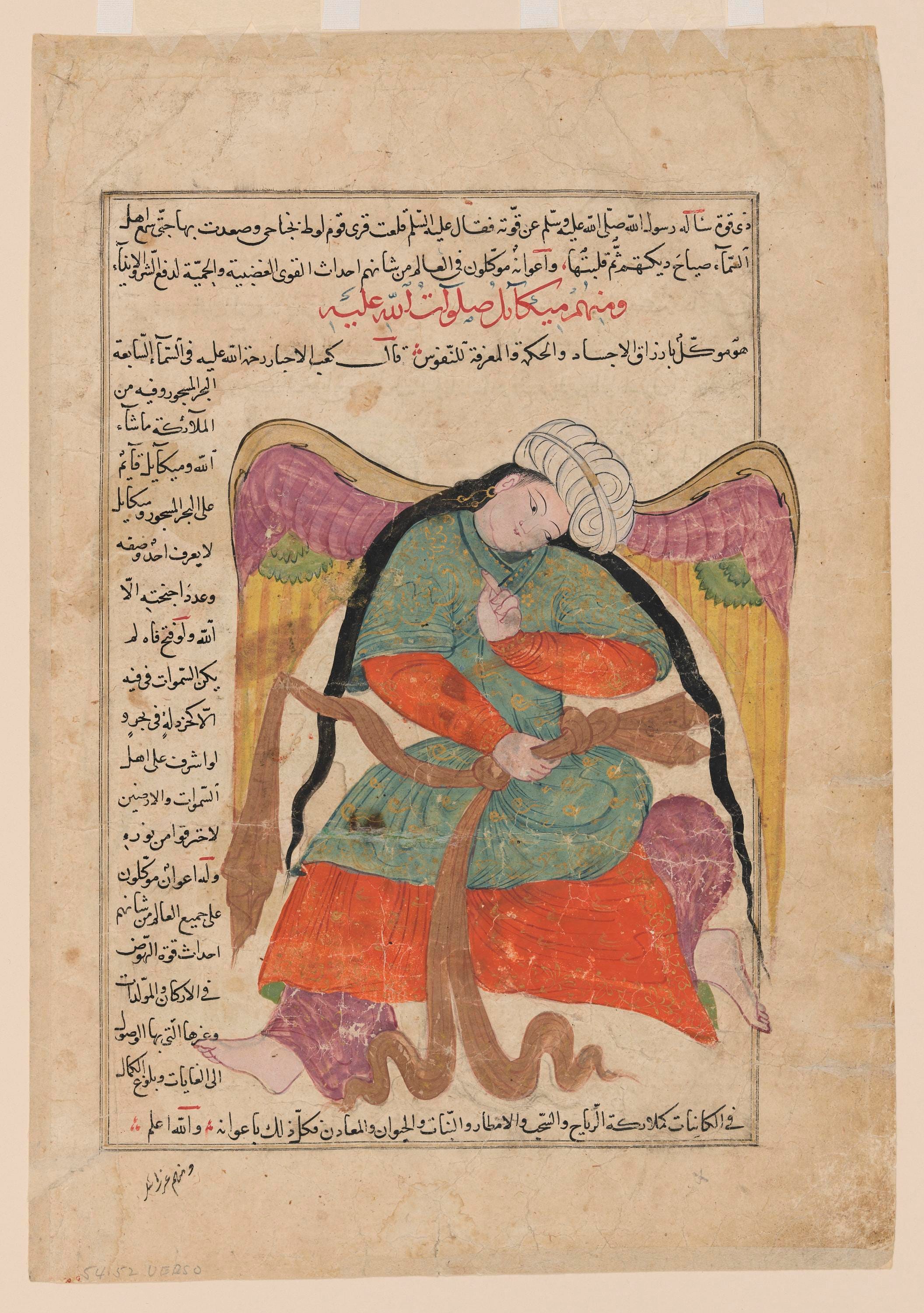
Jewish, Christian, and Muslim lineages convey a number of angel stories — of fearsome heralds and elaborate hospitality and mysterious encounters that are only fully recognized after the fact. Many of these figures go un-named in Holy Writ, but one angel who is named prominently is Michaḗl. He’s experienced and recorded as the commander of God’s Heavenly Host, one who fights to protect the Beloved Community of the faithful. He’s connected to Solar energies, and is known to be both fierce and loving, wielding his ‘sword’ of perception as an instrument of mercy. He’s known as one of several Archangels, a particularly exalted rank of celestial being.
Many Christian communities consider the Archangel Michaḗl a saint, though this designation is typically reserved for humans.* These same communities have named a sacred feast day in honor of Michael, celebrated on September 29th. It’s called Michaelmas (yep – just like Christmas is to Christ), or the Feast of Saint Michael and All Angels. It’s adjacent to the changing of the seasons, the Autumn Equinox in the Western Hemisphere.
(*In the writings of the New Testament, everyone consciously in-dwelt by God's Spirit – aka in Christ – were addressed as saints. Subsequent Christian lineages were more selective in applying the term, reserving it for those friends of God who seemed to exemplify extraordinary virtue or spiritual power.)
What’s the significance of Michaelmas? Rudolf Steiner, a late 19th and early 20th century esoteric teacher best known today for his enduring influence on Waldorf Schools and biodynamic agriculture, considered Michaelmas a festival for the cultivation of “strong will,” second only to Easter in spiritual significance. If Easter is about the transformation of Christ — “He is laid in the grave and He is risen.” Michaelmas is about our transformation, once we become ‘partakers of the Divine nature‘ and enter into the stream of Christ — “He is risen, therefore we can be laid in the grave”. Through our journeying with the Risen Christ, we are laid in the grave with confidence, Death moving from enemy to ally in our transformation. The Archangel Michael is seen as a kind of psychopomp, the traveler between realms who delivers God’s judgements, mercies, and helps us transition to what’s next.
A contemporary devotee of Steiner’s spiritual outlook (called Anthroposophy), teacher and podcaster Conner Habib, shines a clear light on why we’d benefit from the warmth, relationship-building connectivity, and radiant spiritual values of Michaḗl today. His entire Archangel Michaḗl podcast episode is well-worth listening to, but here’s my paraphrase of what Michaelmas means to him:
To understand Michael’s character, one must think of the turning of summer to fall. What was given to us from the outside is now going away, and we must cultivate the strength inwardly within ourselves [by grace] what was once given from the outside [by nature]. We now have to bring this out from ourselves. Just imagine the leaves on the trees; the green is being driven out by that fiery red. Those leaves are falling, and the tree has to depend upon a different kind of life in this season, as autumn approaches and we head into winter.
Conner illustrates this with something every one of us has lived through: When we first fall for someone, love is simply given: we’re swept up, and the beloved is endlessly forgivable. Then the glow fades, and love becomes something we have to choose, practice, and bring forth ourselves.
“We’ve got to bring out of ourselves what was once given,” he says. He names three things this season asks of us: inner warmth, which he describes as taking a genuine interest in another person; connectivity, the recognition that we all share suffering; and letting go of materialism. I hear in these the same three movements that shape this novena. There’s letting go of materialism to wake up our being, taking an interest in others to grow our interbeing, and bearing suffering together to transform our world.
(Conner also points listeners toward Kate Bush’s 1993 song Lily, named for her friend and healer Lily Cornford, in which Bush calls on the four cardinal archangels — Gabriel, Raphael, Michael, and Uriel — to surround and protect her. So if anyone tells you angel prayer is only for church ladies and Renaissance painters, you can inform them that one of the most gloriously weird artists of the last half-century got there first. Give it a listen.)
To me, the image of that autumn tree evokes two of my favorite teachings of Jesus:
Then Jesus told them, ‘Every scribe who has been apprenticed into the kingdom of heaven is like a householder, bringing forth out of their treasure things new and old.’
(Gospel of Matthew 13:52)
and
If you bring forth what is within you, what you bring forth will save you. If you do not bring forth what is within you, what you suppress will destroy you.
(Gospel of Thomas, Logion 70)
As summer turns to fall for many of us, how do we release what no longer serves?
And how do we bring forth what’s inside us, unlocking the energy of the treasures we’ve been given?
In the nine days leading up to September 29th, many friends of God along the Jesus path pray a Novena inspired by Michael’s love and strength, preparing for his feast day.
What’s a Novena?
The word “novena” is derived from the Latin word for nine, or “novem.” Typically, a novena refers to nine days of prayer, asking God for a specific intention, often through a Saint’s intercession. Novenas are a beautiful way to grow purposeful, consistent, and persistent in daily prayer. There are a few reasons why the number nine might be significant. The first comes from the Acts of the Apostles, when Jesus told His disciples to gather together and pray after His Ascension into Heaven. Tradition tells us that the Apostles, along with the Blessed Virgin Mary, went to the Upper Room and prayed together for the nine days between Jesus’ Ascension (believed to have been 40 days after His Passion/Passover) and Pentecost. (Source)
These prayers are often engaged with the aid of a rosary or other prayer beads, though this is optional. The aim is to be in a daily rhythm of prayer, thanksgiving, getting in touch with the desires of our hearts, and joining together as part of a larger movement, cultivating greater presence, coherence, and embodied love.
I’m inviting anyone who feels called into this nine-day season of prayer, beginning today.
When to Pray (and when to Feast!)
We’ll begin today, Sunday, September 20, and pray through Monday, September 28, the eve of Michaelmas. If that feels one day early, there’s a reason. A novena is modeled on the nine days Mary and the apostles spent praying in the Upper Room between the Ascension and Pentecost. When Pentecost came, they didn’t pray a tenth day; they got set on fire. The novena is the preparation, and the feast is the fulfillment. As my Catholi-costal folk magician buddy Jo’el reminded me, a saint’s feast day is for resting in their company, for enjoying them. So we’ll do our asking on days one through nine, and on September 29 we’ll put down the prayer beads and pick up a fork.
Where these prayers come from
I couldn’t find an already-existent Novena that resonated with me, so I crafted my own, drawing from two traditional sources — one from the Christian East, and the other from the West. The Akathist Hymn of Saint Michaēl the Archangel follows a hymn pattern stretching back to the sixth century in central Asia. The Chaplet of Saint Michaēl the Archangel is a prayer originated from a reported Michaelic encounter received by Portuguese Carmelite nun Antónia de Astónaco in the 1750s, which became quite popular, and was officially approved for Roman Catholic use by Pope Pius IX a century later. I incorporate the entirety of the nine-part chaplet, invoking the nine orders of angels common to Christian understanding since Dionysius the Areopagite enumerated them in his sixth-century work On the Celestial Hierarchy. Nine of the thirteen stanzas of Michaēl’s Akathist Hymn are also included. I stay close to the traditional text of both sources, carefully updating some of the language and emphases, as I did for my reconfigured Breastplate of Saint Patrick prayer.
The first day of the Novena and its instructions are below.
I’ve created a beautiful PDF of the entire nine-day cycle that subscribers (even free subscribers) can download. If you’re not seeing it, please subscribe via the button just below and refresh this page:
Praying with Angels, though? Really? I’m too deconstructed (or too Protestant) for that!
If you’re a card-carrying ex-vangelical, progressive, or even garden-variety Protestant who files angels somewhere between Precious Moments figurines and dodgy History Channel specials, you’re in good company. You’re in Walter Wink’s company. Wink was the Methodist minister and Auburn Seminary professor who gave us Jesus’ Third Way, the turn-the-other-cheek-as-creative-resistance reading that prophetically-inclined Jesus-followers now quote without knowing where it originated. He was nobody’s idea of a credulous charismatic.
In 1964, Walter was teaching the Book of Revelation to a group of teenagers in Hitchcock, Texas when he noticed something odd: the seven letters in Revelation chapters two and three aren’t addressed to the churches but to each church’s angel. He confessed he’d never taken angels seriously and wasn’t inclined to start. It had been hard enough, he wrote, getting the Trinity through “the chain-mail mesh of the materialistic mindset” of his training. (As someone who helped pen an entire book on why the Trinity matters, this hits me in my feels) Still, the question nagged at him:
What if the angel of a congregation was its real, palpable spirit: the personality that shows up in the worship, the committee meetings, even the architecture, and outlasts every member who ever sat in its pews?
The question got a lot less academic in 1982, when Wink and his wife June spent a sabbatical in Pinochet’s Chile, then traveled through the barrios and favelas of Latin America. They sat with lawyers for the families of the “disappeared” and with a woman who had been tortured. He was confronted with an evil to personal to be reduced to mere sociology: He came home physically sick, underweight, and in despair: “I had gone there to observe the Powers; I ended up their captive.”
Out of that dark night came a way of seeing that I find more convincing than either fundamentalist demonology or tidy secular dismissal. The demonic isn’t bat-winged bogeymen in the sky. It’s what happens when the angel of an institution (a nation, a corporation, a police force, a church) turns its back on its God-given vocation to serve the common good. And if that’s so, Wink realized, then transformation doesn’t simply mean casting out the demon. It means recalling the angel to its divine task.
This conviction carried him to apartheid South Africa in 1986, where he witnessed what he called perhaps the largest grassroots eruption of nonviolent resistance in human history. Two years later, refused a visa by the powers-that-be, he let the peace activist Rob Robertson try to smuggle him across the border from Lesotho. They pulled up to the guard station in a torrential, out-of-season downpour, and the guard on duty was whistling “Thine Is the Glory.” That was the very hymn the workshop participants had been singing and praying over them all week. The post had no electricity; the soldier asked Wink to read his own passport aloud and never checked for a visa.
So here’s my post-cynical, second-naiveté case for working with angels, and with Michaēl in particular. In the tenth chapter of Daniel in the Hebrew bible, the messenger bringing an answer to Daniel’s prayer is held off for twenty-one days by the angel-prince of Persia, the spirit of an empire. He only gets through because Michaēl shows up and holds this imperial spirit to a standstill. Wink reads this as a picture of how prayer and politics tangle together, and in Engaging the Powers spits a line I’d love to see tattooed on every organizer’s forearm:
History belongs to the intercessors, who believe the future into being.
Praying with Michaēl isn’t a retreat from the work of justice. It’s the interior of this effort, the esoteric side of the coin whose exoteric face is showing up, marching, voting, and dismantling. I’m increasingly convinced that these two together (joined via the warm, mesoteric connective tissue of togetherness with the community of life on Earth) are the only way we co-create something meaningfully new.
Earnest prayer may be our best inoculation against managed consciousness, the drowsy reductionism that insists nothing is real except what can be monetized or measured. (Wink went so far as to call these old angelic categories “a bone in the throat of modernity.” Good. Let’s keep them there.) It’s also worth noticing that even when Michaēl contends with the Adversary in the New Testament’s Letter of Jude, he refuses to hurl insults and says simply, “The Lord rebuke you.” That’s a fierce love that won’t dehumanize even its opponents, and our movements could use more of this energy. You’ll find Wink’s fingerprints all over this Novena, too: every time we pray for Michael to defend “those putting their bodies on the line against corrupted powers-that-be,” we’re praying for the angels of our institutions to remember who they were made to be.
Conner Habib makes a related point about all those paintings of Michaēl and the dragon. Look closely and you’ll see the archangel’s hand, the sword, and the dragon are always joined, so you can’t strike the dragon without touching it. Fight it with its own weapons and you risk becoming it. That’s why, he says, the heart has to be ready: “We don’t evolve past the dragon—we involve him.” Walter Wink spent his life on the same question: how do we overcome evil without becoming evil ourselves? Michaēl’s answer, it seems, is a fierce love that stays human all the way through. Or as Conner puts it, “being human is the strategy.”
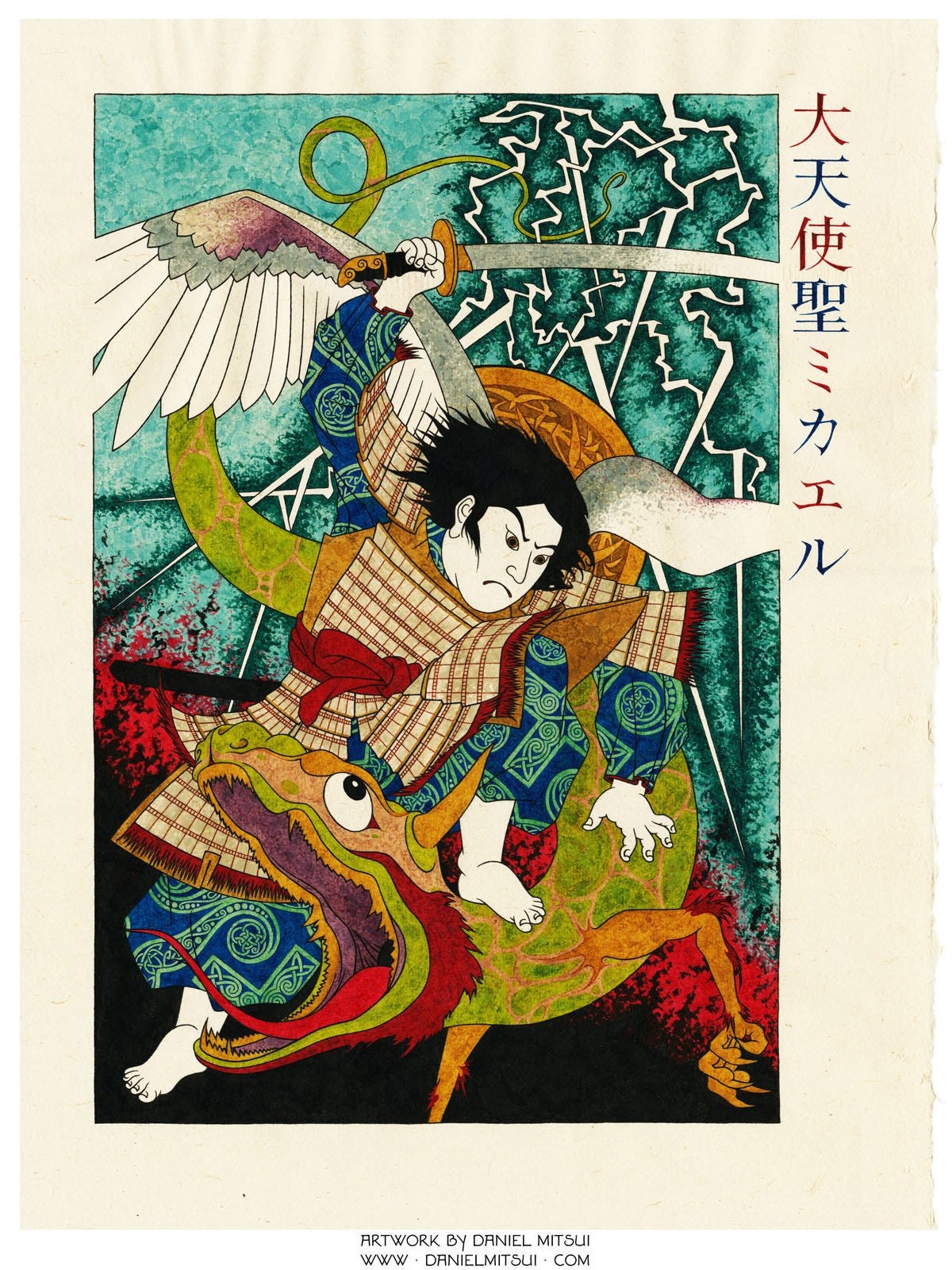
Conner, who has plenty of dialectical materialists among his listeners, usually offers them what he calls “breathing holes,” secular ways to hold his spiritual material. But on Michaelmas, just this once, he dropped the escape hatch. He asked them to stop trying to fit Michaēl into a worldview that has no room for him and simply “allow yourself to be confronted.” I’ll extend the same dare to you, dear reader.
I realize that this prayer invitation isn’t for everyone. Maybe you’re skeptical and/or post-Christian, and this all sounds too ‘religious’ or ‘woo-woo’ for you. Maybe you’re a devout believer, and you’re concerned about me citing sources outside of your specific tradition. But if you find yourself curious…if you’re a fellow composted spiritual weirdo willing to try a prayer experiment and see how it works for you (or doesn’t)…let’s dive in!
And please — let me know how it’s going for you in the comments below.
The Direction of our Prayers
Bring your real needs into these nine days: the diagnosis, the rent, the estranged sibling, the dream you’re scared to name. Nothing genuine is too small for God’s attention. And I’d also invite you to hold one intention for the common good alongside your personal one. Choose a neighbor, a community, an institution, or a nation (surely choices abound) whose angel has forgotten its calling. Reflect on the people being targeted and scapegoated right now, or a place where the powers-that-be are grinding people down. Now imagine around 100,000 of us, scattered across time zones and traditions, praying the same words for the same wounded world at the same time. Then imagine us getting up off our knees willing to put our bodies where our prayers are. Will all 100k of us take on this invitation? I have no idea, but wouldn’t it be amazing? Please forward this to a friend…invite them to join in.
“Now you are the body of Christ,” Paul wrote to the fractious Corinthians, “and each one of you is a part of it.” A prayer often attributed to Teresa of Ávila puts it more bluntly: “Christ has no body now but ours, no hands, no feet on earth but ours.” And the poet Daniel Ladinsky gave us a line that reverberates: “I am a hole in the flute that the Christ’s breath moves through—listen to this music.” Intercession isn’t a substitute for action. It’s how we tune the instrument so the Breath can move through.
An Arc for the Nine days (and the Tenth)
The Chaplet invokes the nine choirs of angels in the order Dionysius gave them, from those nearest God’s throne to those nearest the Earth. This descent forms a solid shape for our nine days. It moves from contemplation, through relationship, into embodied action, revisiting the registers I named at the beginning: esoteric, the mesoteric, and the exoteric.
Days 1–3 (Sept. 20–22): Seraphim, Cherubim, Thrones. Go inward. Name your twin intentions, one personal and one for the common good, and sit with them in silence. Ask for love, trust, and humility before you ask for anything else. The Autumn Equinox arrives the evening of the 22nd, when light and dark hang in balance before the tilt toward longer nights begins.
Days 4–6 (Sept. 23–25): Dominions, Virtues, Powers. Look around. This is the vantage Walter Wink surveyed. Which institution in your life — whether workplace, congregation, city council, or school board — has an angel that needs recalling to its sacred, pro-social vocation? Pray for it by name. Then have one genuine conversation with someone who shares your concern.
Days 7–9 (Sept. 26–28): Principalities, Archangels, Angels. Venture outward. These are the choirs closest to the ground, traditionally associated with cities, nations, and ordinary human lives. Before the 28th is out, take one concrete, embodied action for your common-good intention. Show up, call, give, march, sit with someone, or share a meal with someone. Let your prayer sprout legs.
Day 10 (Tuesday, Sept. 29): Michaelmas, the Feast of St. Michael and All Angels. Rest. Feast. In the British Isles the traditional dish is a Michaelmas goose, and as a co-founder of the Wild Goose Festival I won’t be taking questions on this. At 9:29 that evening, you can join my friend Jo'el Adifon for St. Michael's Blade, a live online ritual for miracles and justice, and bring your nine days of intentions with you. The old folklore also says to pick the last of your blackberries before the 29th. The story goes that when Michael cast the Adversary out of heaven, he landed in a bramble patch and has cursed (and spat on) the berries every Michaelmas since. So make a blackberry cobbler, gather some friends, and toast the angels. Needed efforts will still be there on the 30th, and so will the angels.
Nine-Day Novena with Saint Michaēl the Archangel
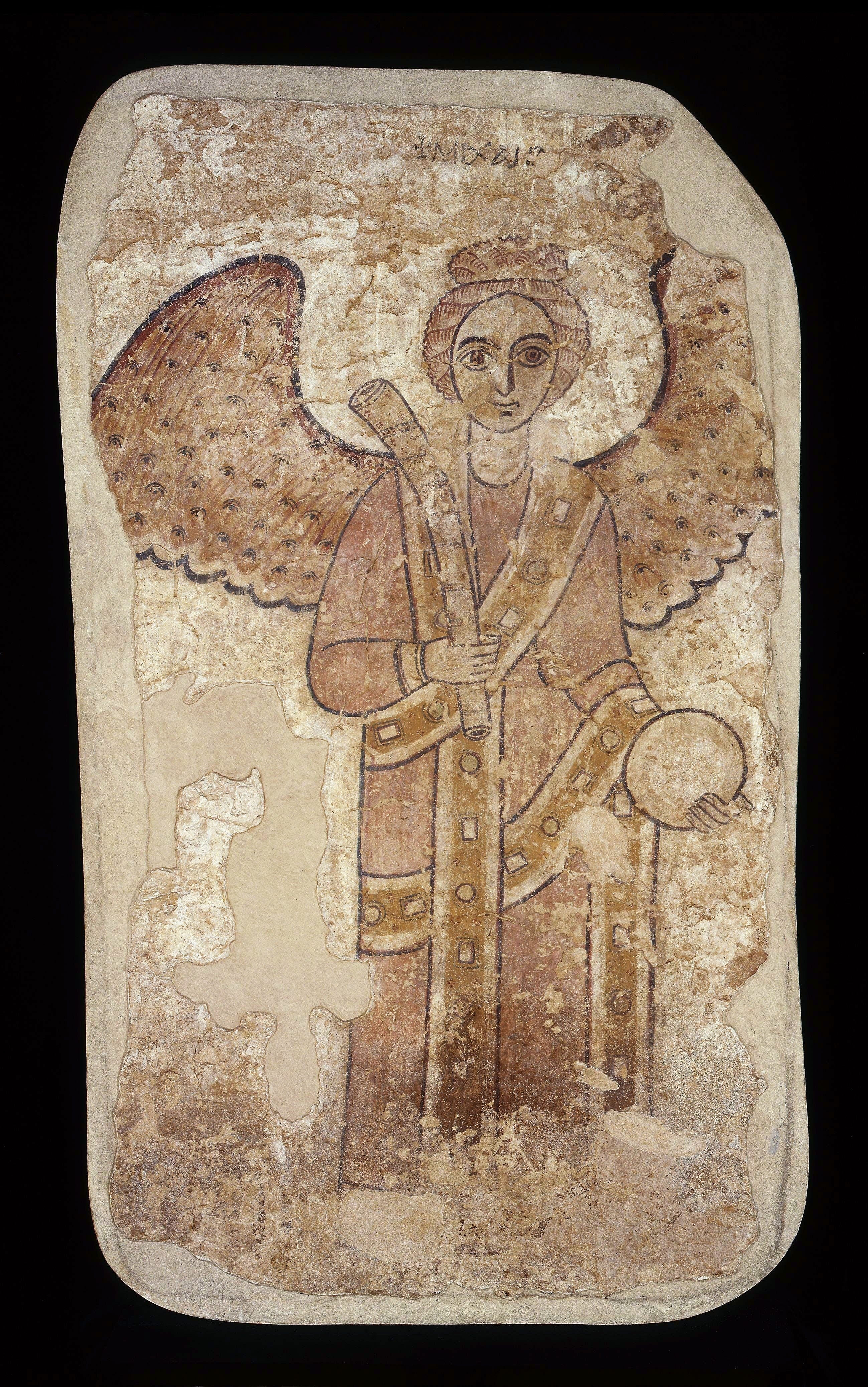
Prayer instructions for each day
Begin with the Sign of the Cross. (See Richard Rohr teach me how to make this sign here)
Pray the Lord’s Prayer, three Hail Marys, and the Glory Be — counting on your fingers or prayer beads (optional).
Pray the Michaēl Daily Prayer.
Pray the Michaēl Novena specific to that day.
End with the Sign of the Cross.
Optional: Enter into 20 minutes of Centering Prayer or another quiet meditation.
Consider how you might “bring forth what is within you,” as you inhabit the grace of this day and the fierce, radiant love of Michaēl.
The Lord’s Prayer
Our Father, who dwells in Heavenly places
Sacred is your Name.
Your kin-dom come
Your will be done
On Earth as it is in Heaven.
Give us today our daily bread
And forgive our debts
Even as we forgive our debtors
Lead us not into temptation
But deliver us from evil
For Yours is the kin-dom
And the power
And the glory
Forever and ever.
Amen.
The Hail Mary
Hail Mary, full of grace, the Lord is with you
Blessed are you among women,
and blessed is the fruit of your womb, Jesus.
Holy Mary, Mother of God, pray for us:
now and at the hour of our death.
Amen.
Glory Be
Glory be to the Father, and to the Son, and to the Holy Spirit.
As it was in the beginning, is now, and ever shall be, cosmos renewing.
Amen
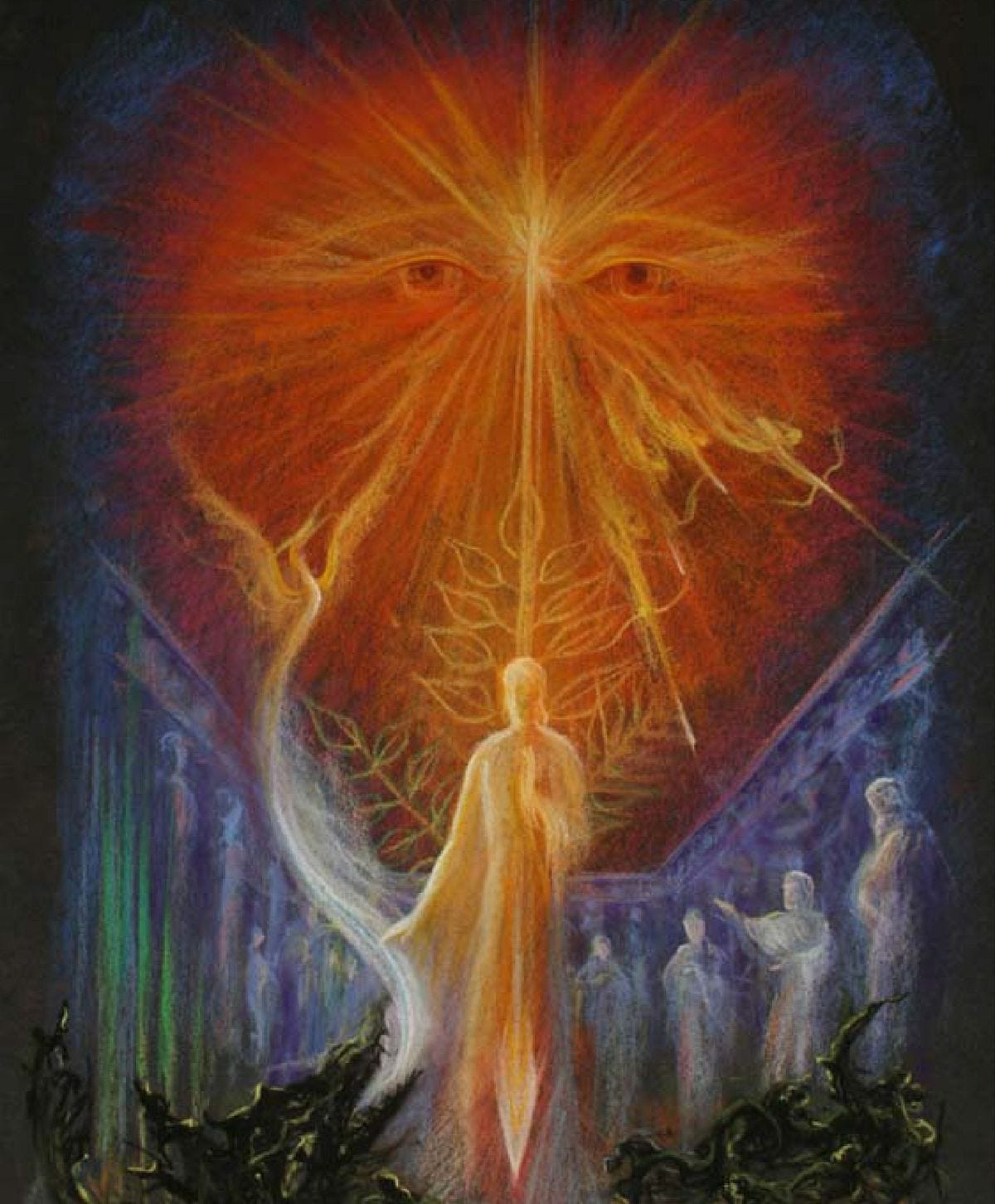
The Michaēl Daily Prayer
Saint Michaēl the Archangel,
loyal champion of God and the Beloved Community
I turn to you with confidence
and seek your powerful intercession.
For the love of God,
Who made you so glorious in grace and power,
and for the love of the Mother of Jesus, the Queen of the Angels,
be pleased to hear our prayer.
You know the value of our souls in the eyes of God.
May no stain of evil disfigure its beauty.
Help us to conquer the accuser who tempts us.
We desire to emulate your loyalty to God and Holy Mother,
reflecting your great love for God and our neighbors.
And since you are God’s messenger for the care of God’s people,
we entrust to you our most cherished intentions:
…name your specific intentions and desires here….
Lord, hear and grant our special intentions for this Novena, in the name of our blessed redeemer Jesus Christ.
Holy God, Holy and Mighty, Holy Immortal: Have Mercy on us.
Amen.
Prayer for the First Day
(Sunday, September 20)
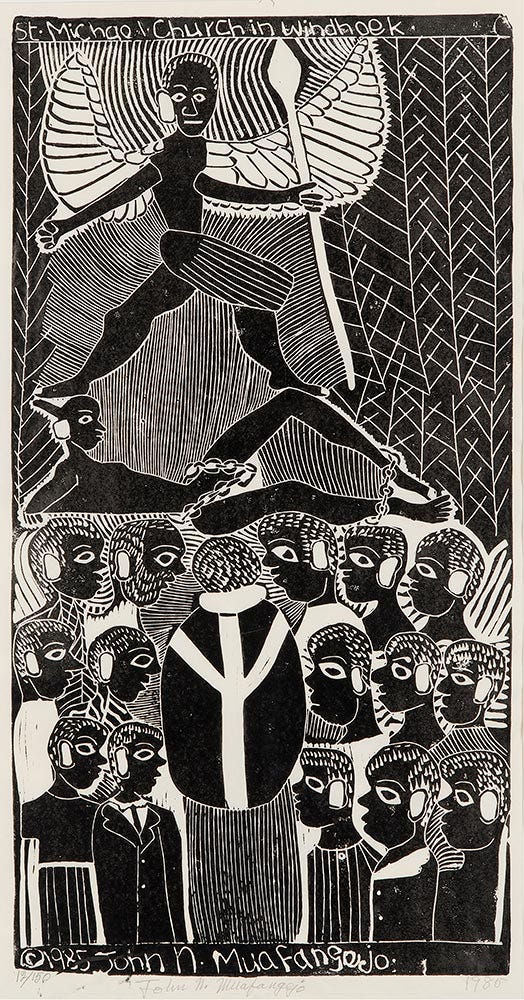
Kontakion
O chosen leader of the heavenly hosts and defender of the human race, we who are delivered by you from afflictions offer you this hymn of thanksgiving. As you stand before the throne of the King of Glory, you free us from all dangers; that with trust and love we may cry unto you in praise:
Rejoice, O Michaēl, supreme commander, with all the hosts of Heaven!
Ikos
With the tongues of angels it is fitting that you are praised as first among the fiery choirs of angels, O Michaēl;
Until you teach us the tongue of the bodiless ones, please hear our tones from tongues which, though human, are yet thankful:
Rejoice, primordial star of the world! Rejoice, candle of truth and justice brightly gleaming!
Rejoice, first receiver of the rays of the uncreated light among the choirs of angels!
Rejoice, captain of Angels and Archangels!
Rejoice, you in whom the glory of the Maker’s right hand shines most of all!
Rejoice, you by whom the assemblies of all bodiless creation are adorned!
Rejoice, O Michaēl, supreme commander, with all the hosts of Heaven!
Chaplet
Through the intercession of St. Michaēl and the Celestial Choir of Seraphim, may it please God to prepare us to receive into our hearts the fire of God’s perfect love.
This is the first day of nine. For a beautiful PDF of the entire nine-day cycle, subscribe below and refresh your page to download. This is freely available for all subscribers, even free subscribers.
I hope this Novena enriches this season days for you. If someone you love might want to pray along, please forward this to them.
Within this next week, I’ll be sending a proper reintroduction. It will cover who I am (for those who’ve forgotten why you signed up), where this newsletter is headed, and why the byline now reads Michael instead of Mike. If you already know you want to walk this road with me, you can become a paid subscriber today. Most of what I write will always be free. Paid members are what make that possible, and I’ll say much more soon about what’s at stake and what they receive.
If you’re on the fence, feel free to stay there a little longer; I’ll make my case properly, and no one will be turned away for lack of funds.
With fierce hope and steady presence,

P.S. If you'd like to close out the novena in company, my pal Jo'el Adifon, the one who set me straight on novena timing, is hosting St. Michael's Blade: A Live Ritual for Miracles and Justice online on Michaelmas itself: Tuesday, September 29, at 9:29 p.m. Eastern. (Yes, 9:29 on 9/29.) It's the perfect after-cobbler capstone. Bring the intentions you've carried all nine days, especially the ones that need a miracle or some divine justice. The event page explains how to submit a petition. Also, I'm told Jo'el's spiritual big sis calls the archangel Spicy Mike, which as a recovering Mike myself, I fully endorse.
I’m glad you decided to hit Send! :-) I liked the first half of one of the things you quoted, but it was the second half that really hit home for me: If you do not bring forth what is within you, what you suppress will destroy you.
I’m so excited for thia do we follow the pdf or the instructions in thia post. This is so cool is it a catholic tradition?